Wiener Schnitzel
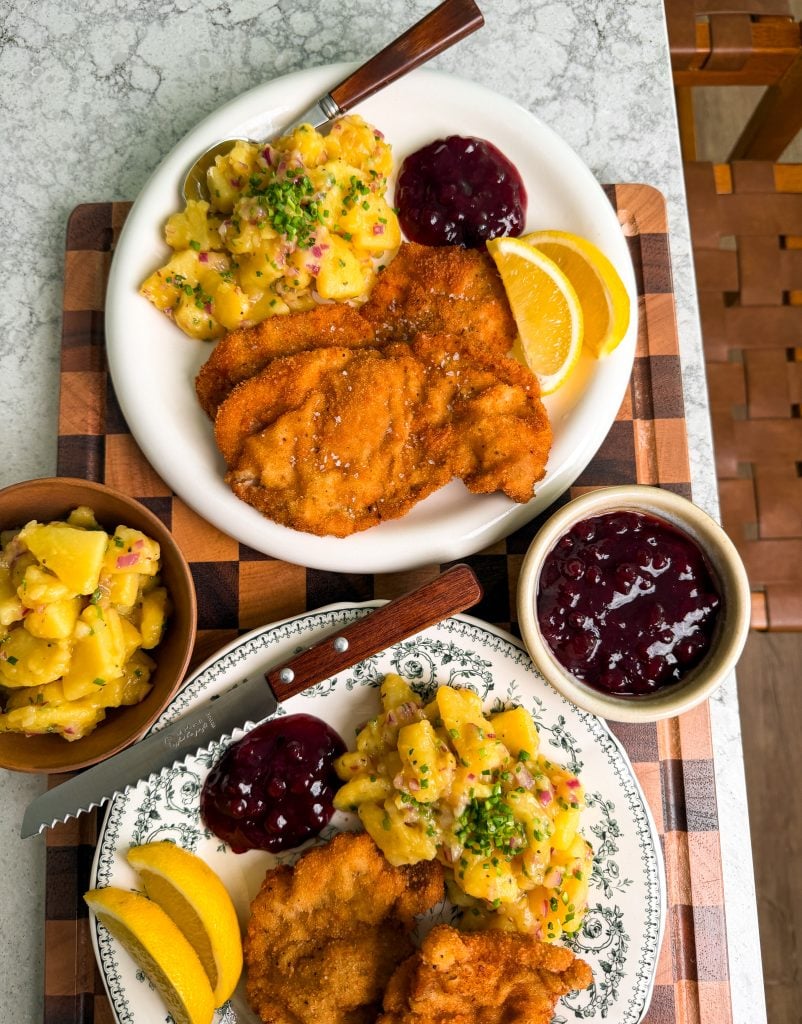
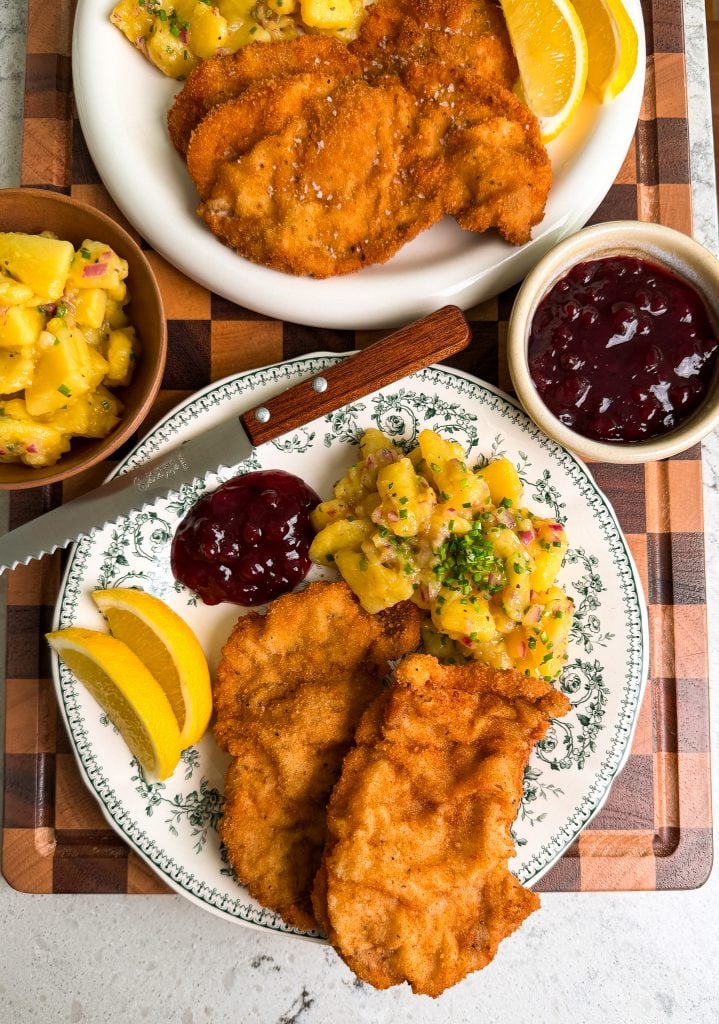
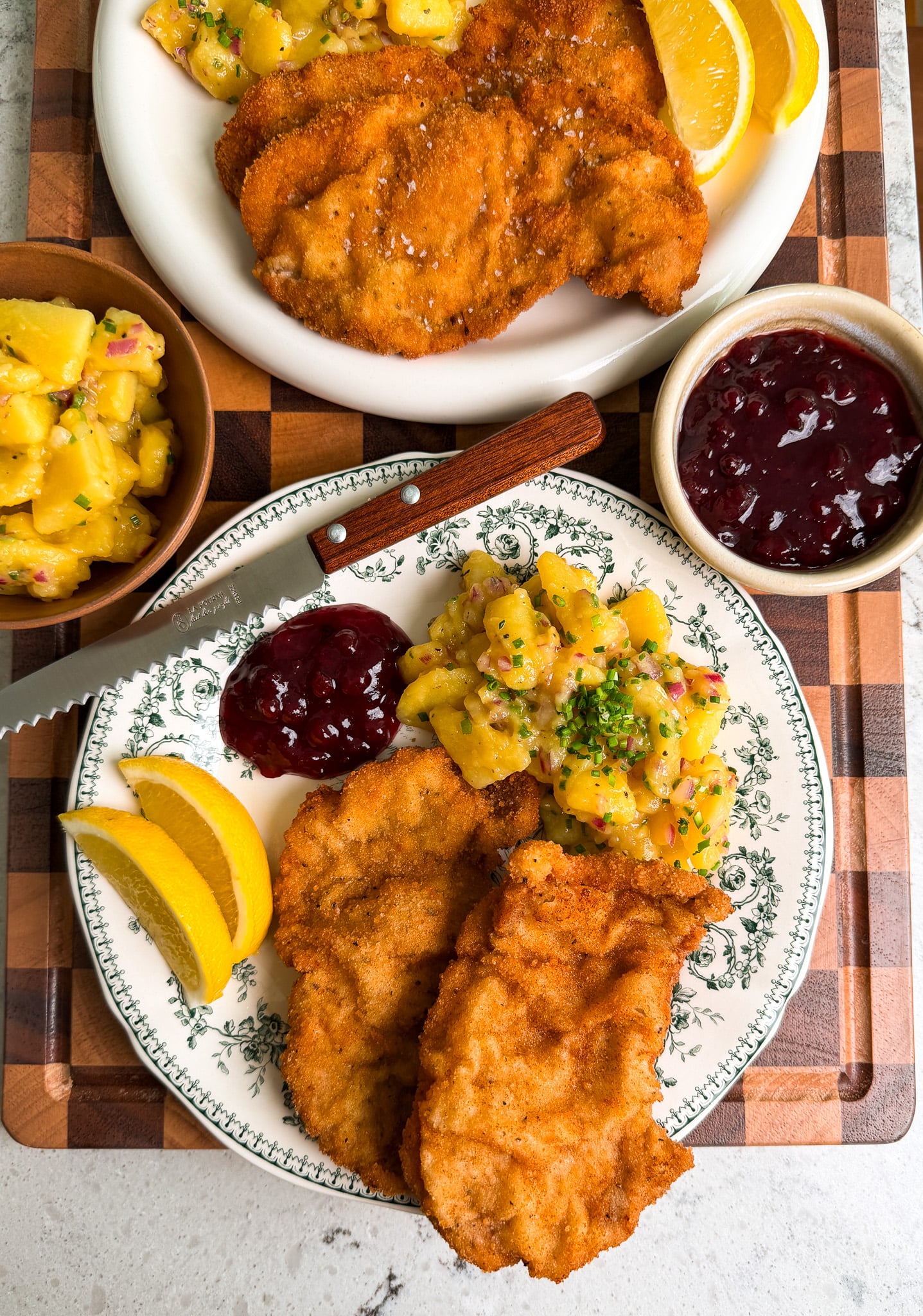
Wienerschnitzel is one of those dishes that sounds simple until you actually eat a great one. Thin veal, a golden crust that’s somehow light and crispy at the same time, served with a warm tangy potato salad and a spoonful of lingonberry jam on the side. What I love most about it is how everything on the plate works together — you get this incredible mix of sweet, tangy, and rich all in one bite. A little lemon juice over everything, some jam with the meat, a forkful of that vinegary potato salad — it just clicks in a way that’s hard to explain until you taste it.
A few months ago I traveled to Austria back in December and ended up eating Wienerschnitzel twice in the span of three days and I have zero regrets about it. I came home completely obsessed and made it a few times before I felt like I really understood what was happening in the pan — why the crust behaves the way it does, what makes it float and bubble instead of going flat and dense. This recipe is everything I learned, and I’m so excited to share it with you.
What Is Wienerschnitzel, Exactly?
Wienerschnitzel is one of Austria’s most iconic dishes — thin veal cutlets, breaded and fried until deeply golden with a signature light, airy crust. It’s not just a schnitzel made in Vienna. Technically, Wiener Schnitzel is legally protected in Austria and must be made with veal. (Chicken versions are delicious too, but they go by different names.)
The dish is simple in the best way: just meat, breadcrumbs, and fat. But like most simple things, the details matter enormously. To make it, you pound veal cutlets very thin, coat them loosely in flour, egg, and breadcrumbs, then fry them in enough fat that they float. The crust looks completely different from a regular chicken cutlet you might be familiar with. It’s more airy and bubbly and almost has a crinkly look to it and it’s all in the technique!
Wienerschnitzel vs. a Regular Breaded Cutlet
This is the question I didn’t know I needed to answer until I started making these at home. Because on the surface, a Wienerschnitzel and a regular breaded cutlet sound pretty similar. Both are meat, both are breaded, both are fried. But they are genuinely different things, and here’s why:
- The crust is loose, not fused. On a regular breaded cutlet, the coating sticks directly to the meat and fries up as one solid layer. On a Wienerschnitzel, the crust is intentionally kept loose so it puffs away from the meat during frying, creating an airy, rippled shell.
- The meat is much thinner. A typical breaded cutlet might be ½ inch thick. A proper schnitzel is pounded to about ⅛ inch — almost translucent in spots. This is what allows it to cook through in minutes without drying out.
- It floats in fat. A regular cutlet is pan-fried with a little oil. Schnitzel is cooked in enough fat that the cutlet can actually float, which is what gives it that even all-over golden color and that signature bubbly lift.
- The texture is totally different. A regular breaded cutlet is crispy in a solid, compact way. A Wienerschnitzel crust is lighter, more delicate — it shatters when you cut into it rather than crunching through.
There’s also a difference in the technique while frying but we will get into that very soon! Once you eat a real one, you can’t unknow the difference.
The Secret to That Signature Crust
Now let’s get into the technique of making it so that it comes out perfect! Here’s the full breakdown of what actually creates that iconic rippled, bubbly crust. If you follow all these dos an dont’s, you’ll be a pro at making weinerschnitzel by the end of this.
- Don’t press the flour. Dredge and shake off the excess. That’s it.
- Don’t press the breadcrumbs. Toss gently to coat, then let the cutlet rest. The coating should sit loosely on the surface, not be packed in.
- Use enough fat so the cutlet floats. This sounds like a lot, but it’s non-negotiable. If the cutlet is sitting flat on the bottom, you’re pan-frying, not schnitzel-frying.
- Shake the pan while it cooks. Gently moving it back and forth keeps hot fat washing over the top of the cutlet, helping the crust lift and set evenly.
- Don’t overcrowd. Too many cutlets at once drops the oil temperature, and you’ll get pale, greasy schnitzel instead of crispy golden ones.
When you keep the coating loose, the steam from the meat pushes the crust away from the surface as it fries, creating that signature puffed, rippled look. That movement is the whole point. It’s not just visual, it’s the difference in texture between a flat dense crust and one that shatters when you cut into it. Set up your three breading bowls — flour, egg, breadcrumbs — coat each cutlet one at a time, and go straight into the hot fat. Don’t let them sit too long after breading or the coating can get soggy.
Let’s Talk About the Veal
For an authentic Wienerschnitzel, you want veal, specifically top round or leg, sliced thin and pounded out until it’s about ⅛-inch thick. The thinness is what lets it cook through in just a couple of minutes, so the crust can get perfectly golden without the meat drying out. Place the slices between two sheets of parchment or plastic wrap and use a meat mallet to pound them out evenly. Work from the center outward so you don’t tear the meat.
Where to find it: Look for pre-cut veal cutlets at a butcher or a good grocery store with a real meat counter. If you can only find a whole piece, buy veal top round or leg and slice it yourself — it’s easier than it sounds.
Can I use chicken instead? Yes! Chicken breast works beautifully here. Slice it thin or pound it out to the same ⅛-inch thickness, and the technique is identical.
Oil + Clarified Butter: The Frying Combo You Need
A lot of schnitzel recipes call for clarified butter, and for good reason. It adds richness and that classic flavor. I decided to use a mix fix of neutral oil with clarified butter because I would need a lot of ghee to fill up the whole pan.
To fry, heat your oil and clarified butter together in a wide pan over medium heat. You want the fat hot enough that a breadcrumb dropped in sizzles immediately. Add one or two cutlets at a time, shake the pan gently, and flip after about 2 to 3 minutes when the bottom is deeply golden. The whole thing cooks fast so don’t walk away.
🤎 Tip: The fat should be deep enough that the cutlet floats. This is not the time to be conservative with oil. Use a wide pan, add more than you think you need, and trust the process.
The Potato Salad Situation
Austrian potato salad is not the mayonnaise-heavy version you might be used to. It’s warm, vinegary, and light because it’s made with a dressing of vinegar, mustard, chicken bouillon, and a little sugar that soaks into the warm potatoes like a dream. To make it, boil your gold potatoes whole with the skin on, then peel and slice them while still warm. Whisk the dressing together separately, pour it over the warm potatoes right away, toss in the red onion and chives, and let it sit so everything absorbs.
A few sourcing notes:
- Gold potatoes hold their shape better than russets here and they are a bit more buttery in texture and flavor
- Rice vinegar gives a cleaner, milder tang than white vinegar; either works but rice vinegar is my preference
- The bouillon cube in the dressing sounds odd but adds savory depth that rounds the whole thing out. It’s very common to add reduced chicken broth to Austrian potato salad
🤎 Tip: Make the potato salad first. It genuinely gets better as it sits and the potatoes absorb the dressing. You can even make it a day ahead.
Common Mistakes to Avoid
- Pressing the breading — loose coating = bubbly crust, compacted coating = sad flat schnitzel
- Not enough fat in the pan — if your cutlet is sitting on the bottom, add more oil
- Overcrowding the pan — fry one or two at a time, always
- Uneven pounding — an uneven cutlet means some parts are overcooked by the time others are done; take your time with it
- Skipping the lemon — a squeeze right before eating cuts through the richness and makes everything taste brighter; don’t skip it
Fun Variations to Try
- Chicken Schnitzel — same technique, chicken breast pounded thin; just as satisfying and more accessible if you can’t get your hands on veal
- Spicy version — add a pinch of cayenne to the flour for a little heat
- Lemony potato salad — add a little lemon juice to the dressing alongside the vinegar for extra brightness
The Finishing Touches: Lemon and Lingonberry
Serve your schnitzel with a fat wedge of lemon and a spoonful of lingonberry jam on the side. The jam is traditional and it genuinely works. The sweet-tart berry flavor is a great contrast to the rich, savory meat. You can find it at IKEA of all places, or grab this one I love online. It’s worth tracking down.
This is one of those recipes I come back to when I want something that feels special but is actually very doable on a weeknight. Once you understand the technique, it comes together quickly and it never fails to impress. Make the potato salad ahead, set up your breading station, and you’re most of the way there.
Craving More Crispiness? Try These Recipes Out!
If this schnitzel has you on a crispy food kick, here are a few more recipes you’ll love:
- Extra Crispy Sweet Potato Fries: the secret to making the crispiest sweet potato fries to ever exist
- Crispy Garlic Parmesan Fries: fried to golden perfection and tossed in the most incredible garlic herb butter
- Crispy Shrimp Balls: a popular Chinese-inspired appetizer with the crunchiest exterior using a genius secret ingredient
- Crispy Potato Tacos: vegetarian, packed with flavor, and fried until perfectly golden
- Copycat Cava Pita Chips: crispy on the outside, thick and fluffy on the inside
If you make this recipe, make sure to leave a comment below and let me know how it turns out — I love hearing from you! And if you snap a photo, don’t forget to tag me over on Instagram or TikTok so I can see your creations too.
You can also find this recipe and so many more on my Pinterest — perfect for saving to your board for later. And if you’re more of a visual learner, check out my YouTube channel, where I walk you through recipes step-by-step just like this one.
Dinner | Main Course
Wienerschnitzel with Potato Salad
Ingredients
POTATO SALAD
- 1 pound gold potatoes, boiled with skin on
- 1/2 red onion, finely chopped
- 2 tablespoons chives, finely chopped
- 3 tablespoons rice vinegar
- 2 tablespoons neutral oil
- 1/2 tablespoon yellow or Dijon mustard
- 1/4 cup boiling water + 2 teaspoons chicken bouillon
- 2 teaspoons white sugar
- Salt, to taste
- Black pepper, to taste
VEAL CUTLETS
- 1 pound veal cutlets (about 4 thin pieces, or use veal top round or leg and slice/pound thin yourself)
BREADING STATION
- 1 cup all-purpose flour
- 1/2 teaspoon salt
- 1/2 teaspoon black pepper
- 3 large eggs
- 3 tablespoons milk
- Pinch of salt
- Pinch of black pepper
- 2 cups fine breadcrumbs
- 1/2 teaspoon salt
- 1/2 teaspoon black pepper
FOR FRYING
- Neutral oil (enough for the cutlets to float)
- Clarified butter
TO SERVE
- Lemon wedges
- Lingonberry jam
Instructions
MAKE THE POTATO SALAD
- Boil the potatoes whole with the skin on in salted water for about 15 to 20 minutes, or until fork tender in the center. The bigger your potatoes, the longer they will take.
- While the potatoes boil, dissolve the chicken bouillon cube in the boiling water in a small bowl. Then whisk in the rice vinegar, mustard, neutral oil, sugar, salt, and pepper to make the dressing.
- Once the potatoes are cool enough to handle, peel them. Slice into 4 wedges, then cut each wedge into slices about 1/4-inch thick.
- Add the warm potatoes, sliced red onion, and chives to the dressing. Toss it all together and let it sit so the potatoes absorb all the flavor.
PREPARE THE CUTLETS
- If using a whole cut like veal top round or leg, slice it into pieces about 1/4-inch thick.
- Place between parchment or plastic wrap and pound until very thin, about 1/8-inch thick. The cutlet should be wide and even. If you prefer it a bit thicker, you can leave it at 1/4-inch thick.
- Lightly season both sides with salt and pepper.
SET UP THE BREADING STATION
- In one bowl, mix flour with salt and pepper.
- In a second bowl, whisk eggs with milk, a pinch of salt, and pepper.
- In a third bowl, combine breadcrumbs with salt and pepper.
BREAD THE SCHNITZEL
- Begin by heating enough neutral oil with clarified butter so the cutlets can float in the pan over medium heat.
- While the oil heats, dredge each cutlet in the flour, shaking off excess. Do not press it in. Make sure to use one hand for the dry and the other for the wet.
- Dip into the egg, letting the excess drip off.
- Coat in breadcrumbs, gently tossing to coat. Do not press the breadcrumbs in.
FRY THE SCHNITZEL
- Once the oil is hot enough, add 1 or 2 cutlets at a time depending on the size of your pan and the cutlets. Do not overcrowd and fry in batches as needed.
- Gently shake the pan back and forth as it cooks so the hot fat moves over the top of the cutlet.
- Fry until golden and crispy, about 2 minutes per side.
- Transfer to a wire rack baking sheet to drain any excess oil and to keep it crispy while the rest are fried.
ASSEMBLE
- Plate the schnitzel with a side of potato salad, lingonberry jam and a fresh lemon wedge to enjoy!
Tips & Notes
Q: Can I use chicken instead of veal?
A: Yes, chicken breast works great. Just slice it thin or pound it out so it cooks quickly and evenly.
Q: Why fry in oil and clarified butter together?
A: The oil prevents burning while the clarified butter adds that classic rich schnitzel flavor.
Q: Why do you shake the pan while frying?
A: Gently shaking helps the hot fat move over the top of the schnitzel, creating that signature light, bubbly, airy crust instead of a flat, dense coating.
Q: Why shouldn’t I press the flour or breadcrumbs in?
A: Pressing compacts the coating, which makes it dense and flat instead of light and airy. Letting the coating stay loose helps it puff up and separate slightly as it fries, giving you that classic bubbly schnitzel crust.
Q: How do I know the schnitzel is done?
A: It should be golden, crispy, and slightly puffed with an airy crust.
Q: Can I make the potato salad ahead of time?
A: Yes, it gets even better as it sits since the potatoes soak up the dressing.
You Might Also Like


HI, I’M HAJAR
Welcome to Moribyan! This is my blog where I love to share all my favorite recipes and lifestyle tips with you all. If I’m not cooking here, I’m either at Trader Joe’s, the gym, or eating a bagel.
LET’S CONNECT
Pin This Recipe