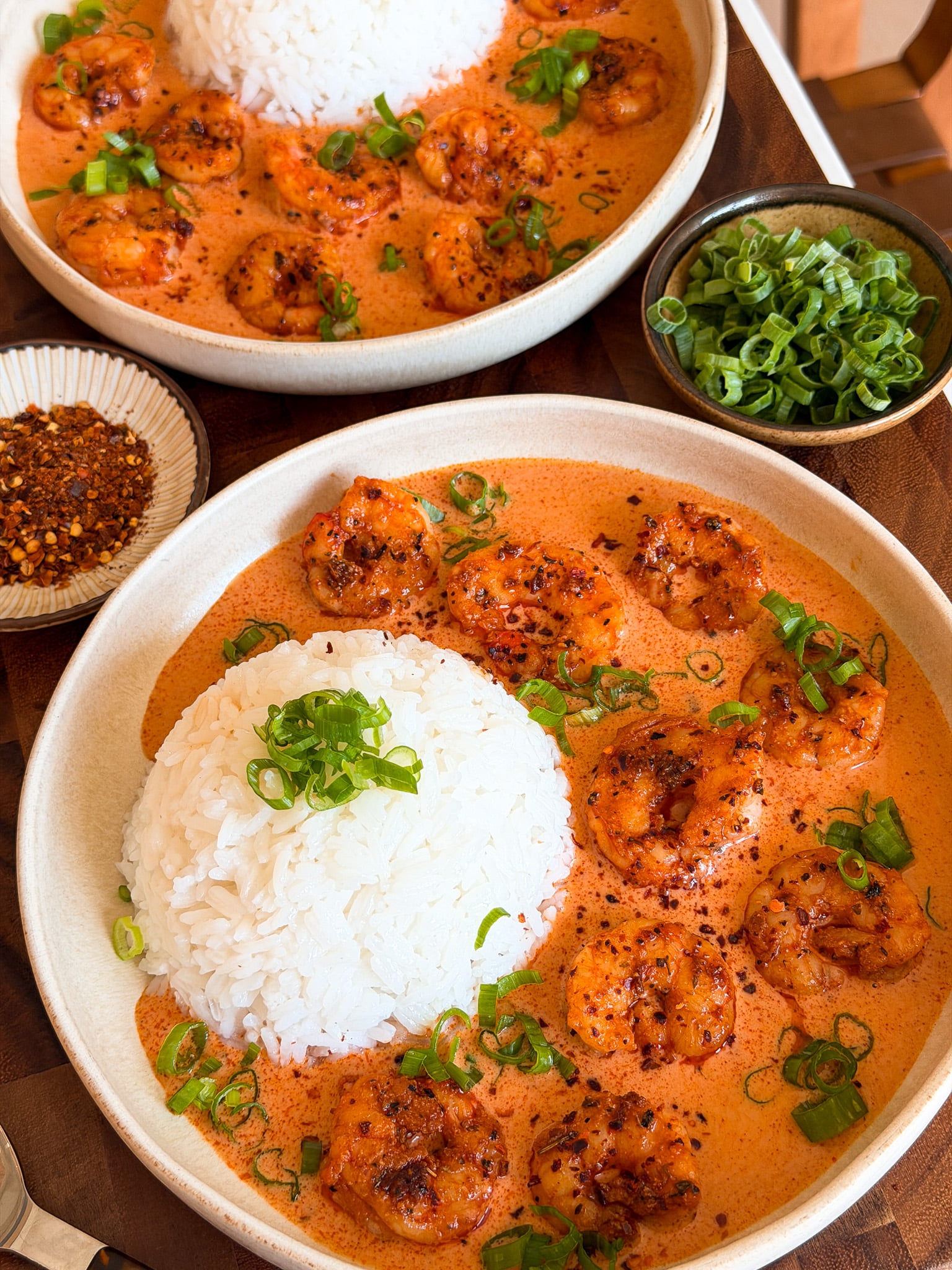
There’s a very specific kind of dinner I crave on a weeknight. Something with a little heat, a little sweetness, and a sauce so good you’re scraping the pan with your spoon. This creamy coconut gochujang shrimp is exactly that. It’s Korean-inspired heat meets rich, creamy coconut milk, all built in one pan in about half an hour. Sound like a lot for a weeknight? It’s not, I promise.
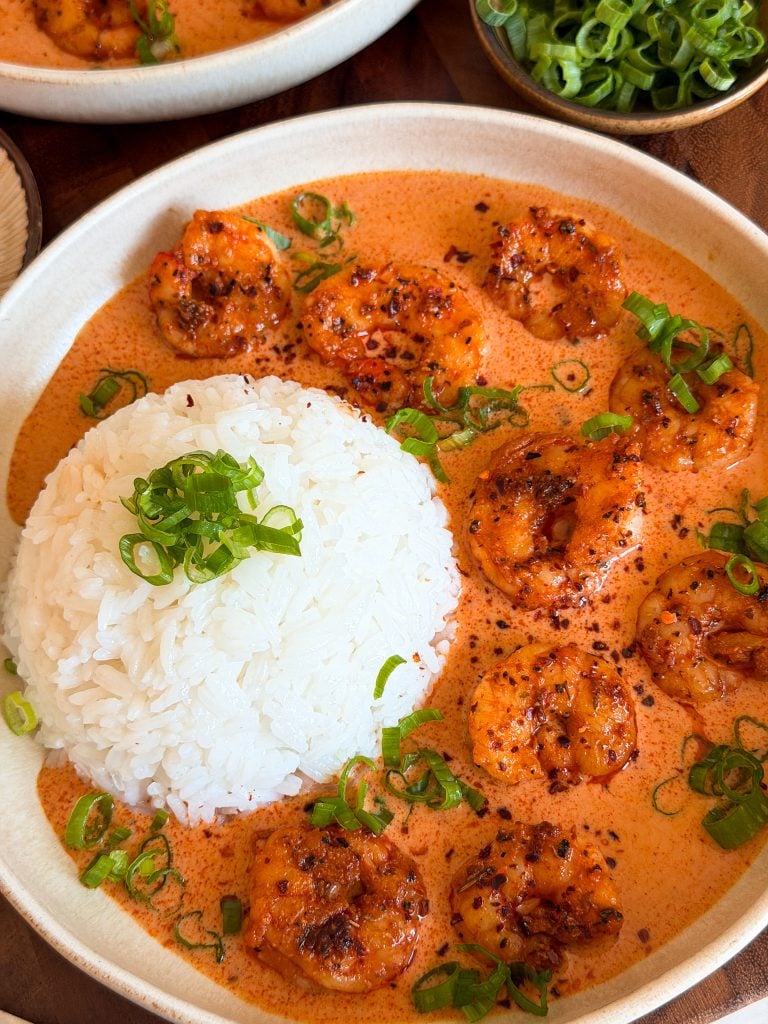
I’ve been leaning into gochujang in my sauces a lot lately, and pairing it with coconut milk was one of those combinations that just made sense the second I thought of it. The heat, the richness, that little tang from the tomato paste and soy… it tastes like it’s been simmering all day but it hasn’t!
What Makes This One Special
There are levels of flavor to this! The shrimp get seasoned and seared first, on their own, so they actually develop color and flavor instead of steaming in liquid. Then the sauce is built in stages — aromatics, paste, liquid, seasoning — the same order you’d use in a professional kitchen for any good pan sauce.
That order matters more than people think. Blooming the gochujang and tomato paste in the butter before any liquid goes in deepens the flavor in a way you just can’t get by throwing everything in at once.
And because the shrimp are seared separately and only meet the sauce at plating, they stay firm and snappy instead of turning rubbery.
Ingredient Breakdown
For the shrimp, I like using large or jumbo shrimp (about 21/25 or 16/20 count per pound). They hold up better in the sear and give you a much more satisfying bite than smaller shrimp. I always use frozen shrimp for this one; just make sure they’re fully thawed and very dry before seasoning, because wet shrimp will steam instead of sear.
Make sure your shrimp are peeled and deveined before you start. Most bags of frozen shrimp come this way already, but if yours don’t, it’s an easy fix: using a small paring knife, run a shallow cut down the back (the outer curve) of the shrimp, then use the tip of the knife to lift out that thin, dark vein. A quick rinse under cold water and they’re ready to season.
Once the shrimp are prepped, the seasoning is simple. Just paprika, onion powder, dried oregano, salt, and pepper. Nothing fancy, just enough to build flavor before they hit the pan.
The sauce is where the magic happens:
- Butter and garlic as the aromatic base
- Gochujang paste for heat and depth
- Tomato paste for a little acidity and body
- Coconut milk to bring it all together into something rich and glossy
- Chicken bouillon (or salt, if you skip it) for savoriness
- Soy sauce, sugar, and chili flakes to finish it off
Don’t skip the sugar. It balances the gochujang’s heat and actually helps bring out the natural sweetness of the coconut milk, so the whole sauce tastes rounder instead of one-note.
How To Make It
Season and sear the shrimp
Toss your shrimp with olive oil, paprika, salt, black pepper, onion powder, and dried oregano until every piece is evenly coated. Heat a large sauté pan or skillet over medium-high. You want it properly hot before the shrimp go in, or you’ll lose the sear.
Lay the shrimp in a single layer (don’t crowd the pan) and let them cook undisturbed for about 3 minutes per side, until pink and golden and cooked through. Pull them onto a plate right away so they don’t overcook from residual heat.
Build the sauce
Same pan — don’t wipe it out, all that shrimp flavor stays right where you want it. Melt the butter with the minced garlic over medium heat and let it cook for a minute or two until fragrant.
Add the gochujang paste and tomato paste next, whisking them into the butter. Let that cook for about a minute or two until you notice the color deepen slightly and the raw edge on the tomato paste mellow out.
Pour in the coconut milk along with the crumbled bouillon, soy sauce, paprika, sugar, and chili flakes, then whisk until smooth. Bring it to a simmer and let it cook for 5 to 6 minutes, stirring occasionally, until it thickens and coats the back of a spoon.
Bring it together
And finally we’re almost at the finish line! Now the shrimp don’t go back in the pan. They stay separate all the way through plating, which is exactly what keeps them from overcooking.
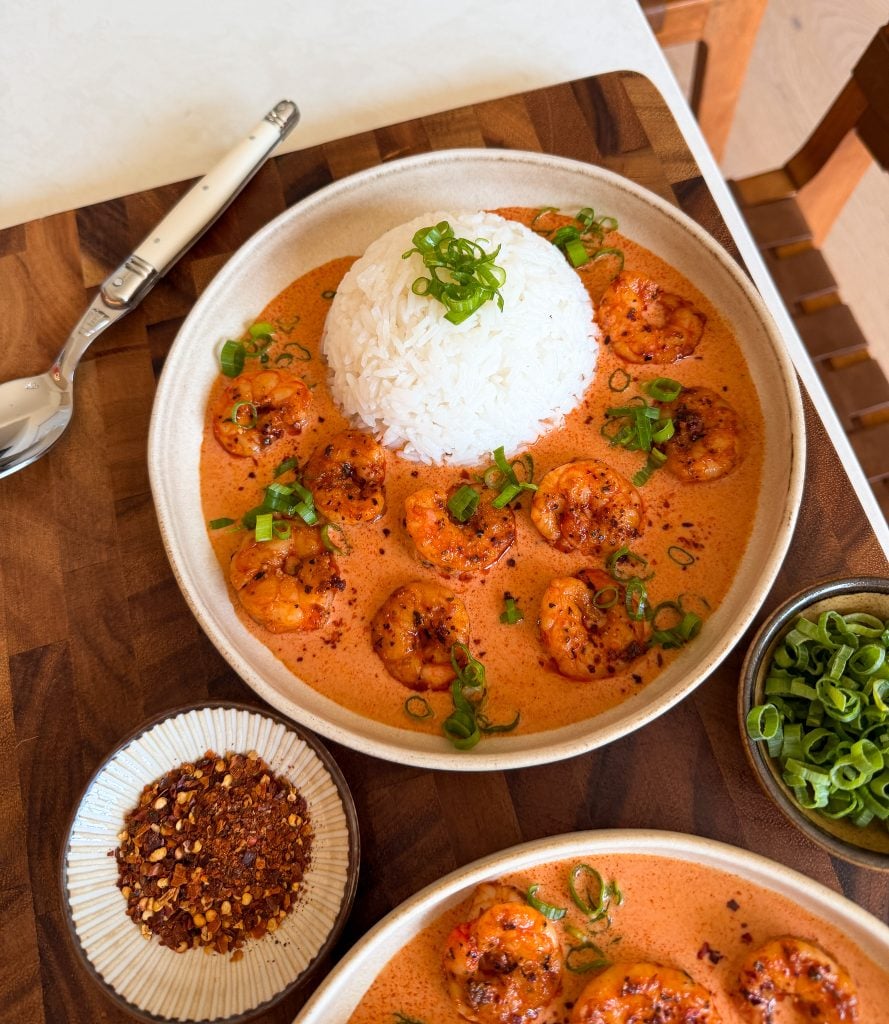
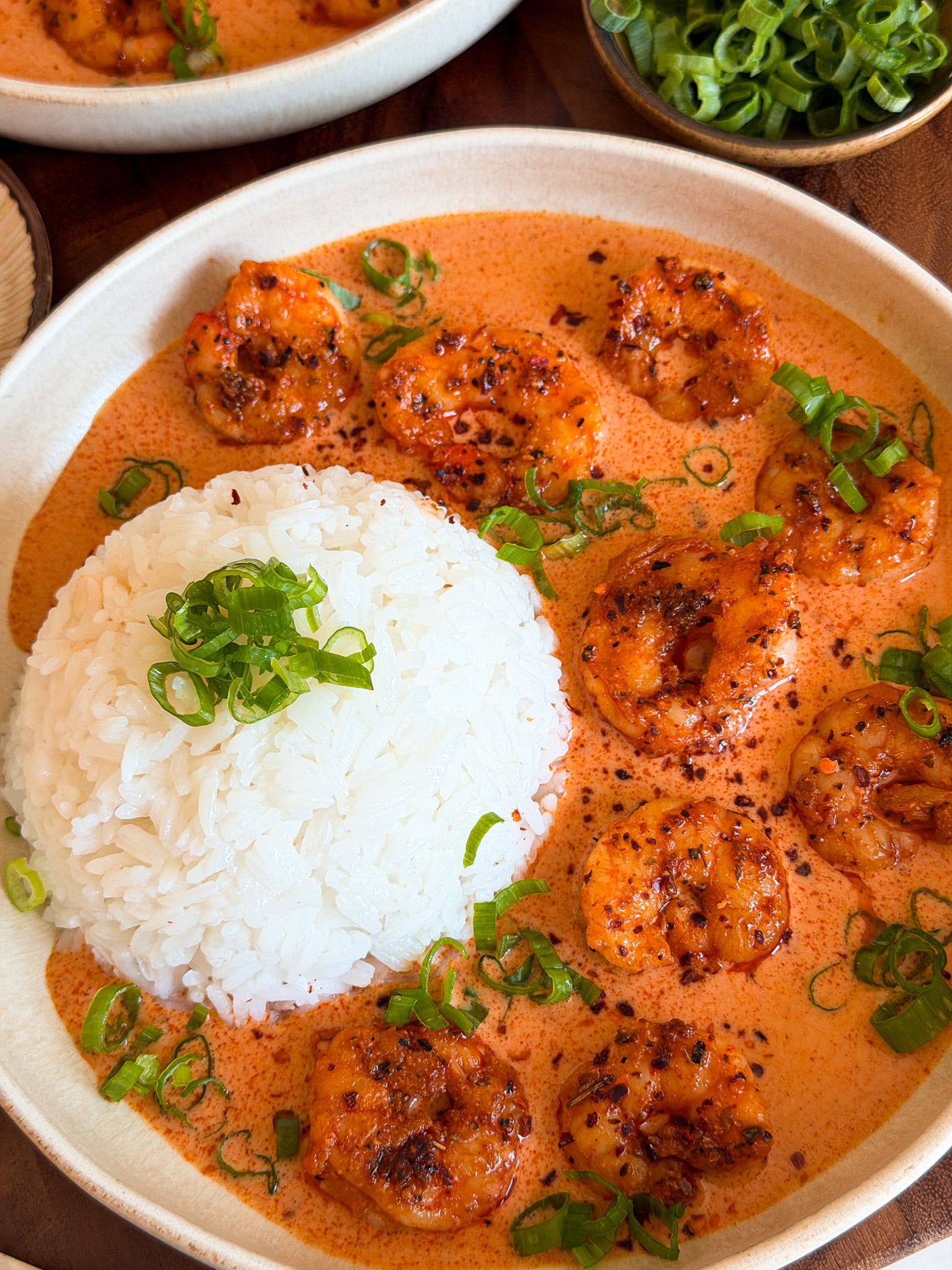
So instead of stirring everything together, you build the plate: rice first, sauce around it, shrimp on top. Finish it with some chili flakes and green onions and it’s ready to enjoy.
Make Ahead & Storing Leftovers
The sauce can be made up to 3 days ahead and stored in an airtight container in the fridge. Just reheat it gently in a pan over low heat before serving.
I don’t recommend cooking the shrimp ahead of time. They’re best fresh off the sear, and they’ll lose that tender bite the longer they sit. If you do have leftover cooked shrimp, store them separately from the sauce and reheat gently, just until warmed through.
Tips & Variations
A few small things that make a big difference here:
- Pat your shrimp completely dry before seasoning — any extra moisture will keep them from searing properly.
- Use a mild gochujang paste if you want to keep the heat approachable; that’s what I reach for most of the time.
- No bouillon on hand? Just season the sauce with salt to taste instead — it works just as well.
- Want more veggies in the mix? Baby spinach or snap peas stirred into the sauce at the end would work beautifully here.
Craving More Shrimp? Try These Recipes Out!
- Shrimp Scampi – A garlicky, buttery one-pan shrimp dinner ready in 30 minutes.
- Honey Butter Garlic Shrimp – Crispy shrimp tossed in a sweet and savory honey butter garlic glaze.
- Bang Bang Shrimp – Crispy fried shrimp coated in a sweet and slightly spicy bang bang sauce.
- Chipotle Shrimp Rice Bowls – Smoky, spicy chipotle shrimp served over cilantro lime rice with all your favorite toppings.
- Volcano Shrimp – Crispy battered shrimp tossed in a sweet and spicy buffalo-based volcano sauce.
If you make this recipe, make sure to leave a comment below and let me know how it turns out — I love hearing from you! And if you snap a photo, don’t forget to tag me over on Instagram or TikTok so I can see your creations too.
You can also find this recipe and so many more on my Pinterest — perfect for saving to your board for later. And if you’re more of a visual learner, check out my YouTube channel, where I walk you through recipes step-by-step just like this one.
Creamy Coconut Gochujang Shrimp
Ingredients
SHRIMP
- 1 pound large shrimp, peeled and deveined
- 1 tablespoon olive oil
- 1 teaspoon paprika
- 3/4 teaspoon salt
- 1/2 teaspoon black pepper
- 1/2 teaspoon onion powder
- 1/2 teaspoon dried oregano
SAUCE
- 2 tablespoons unsalted butter
- 2 teaspoons minced garlic
- 2 tablespoons gochujang paste
- 1 tablespoon tomato paste
- 1 can, 13.5 ounces coconut milk
- 1 small chicken bouillon cube, or 1/2 a large cube, crumbled
- 1/2 tablespoon low sodium soy sauce
- 1 teaspoon paprika
- 1 teaspoon granulated sugar
- 3/4 to 1 teaspoon chili flakes, to taste
FOR SERVING
- Jasmine rice
- Green onions, sliced
Instructions
COOK THE SHRIMP
- In a medium bowl, add the shrimp, olive oil, paprika, salt, black pepper, onion powder, and dried oregano, then toss until evenly coated.
- In a large sauté pan or skillet over medium-high heat, add the seasoned shrimp in a single layer, then sear for about 3 minutes per side until beautifully golden and pink and cooked through.
- Transfer the shrimp to a plate and set aside.
MAKE THE SAUCE
- In the same large sauté pan or skillet, without cleaning it, over medium heat, add the butter and minced garlic, then cook for 1 to 2 minutes until fragrant.
- Add the gochujang paste and tomato paste, then whisk until combined and cook down for about 1 to 2 minutes.
- Add the coconut milk, crumbled bouillon, soy sauce, paprika, granulated sugar, and chili flakes, then whisk until smooth.
- Bring the sauce to a simmer, then cook for 5 to 6 minutes, stirring occasionally, until thick and creamy. Taste and adjust anything to your liking.
COMBINE & SERVE
- In a serving bowl, add a scoop of jasmine rice.
- Pour the sauce around the rice.
- Arrange the shrimp on top of the sauce, then garnish with sliced green onions and enjoy!
Notes
Did You Make This Recipe?
If you make this recipe, leave a comment below and let me know how it turns out. I love hearing from you!


Rate & Review