Kaiserschmarrn is one of those dishes that instantly takes me back to a place. For me, that place is Vienna. I spent the end of the 2025 year there, bundled up and hopping between cafés, and one stop that fully lived up to the hype was Demel. We waited close to an hour in line, standing out in the cold, and it was still completely worth it. When that plate finally hit the table—light, fluffy pieces piled high, crisp edges peeking through, powdered sugar everywhere—I understood why this dish is so iconic.
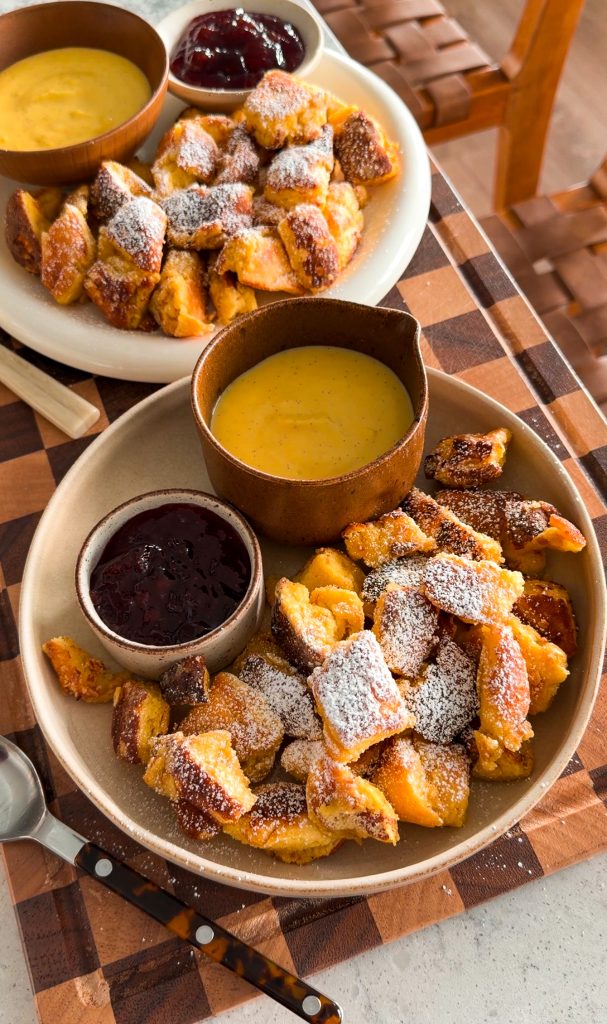
Traditionally, Kaiserschmarrn is served with plum sauce, but many versions include alcohol, so I skipped it and they gave us a vanilla cream instead for dipping. I didn’t miss it at all. The vanilla sauce was unreal – warm, smooth, and lightly sweet. Honestly, it might be one of my favorite sauces ever. That experience is what pushed me to recreate this at home in a way that feels true to the dish but still approachable.
When we were seated outside at Demel, our table was right next to the window where they make the kaiserschmarrn. I watched the entire process from start to finish, especially the technique of how it’s cut and torn into small pieces right in the pan before being caramelized. I paid close attention to every step, gathering all the little tips and tricks so I could recreate it properly once I got back home.
At its core, Kaiserschmarrn is a shredded pancake and unlike American pancakes, these are meant to be enjoyed as a dessert. It’s light and melt-in-your-mouth through the center, with crispy, caramelized edges throughout. The contrast is everything, and once you understand the technique, it’s much easier than it looks.
Where Kaiserschmarrn Comes From
Kaiserschmarrn dates back to the Austro-Hungarian Empire and is most commonly linked to Emperor Franz Joseph I. “Kaiser” means emperor, and “Schmarrn” loosely translates to something scrambled or messy—which perfectly describes how the dish is cooked and served.
One of the most popular origin stories says the dish began as a more refined pancake meant for the emperor. When it didn’t turn out as planned, it was torn apart, cooked in butter, sweetened, and served anyway. The emperor loved it, and what started as a kitchen mistake became a staple of Austrian cuisine. Whether that story is entirely true or not, the spirit of the dish has always been about embracing imperfection.
Let’s Start with the Vanilla Sauce
This vanilla sauce is a classic custard-style sauce. It’s simple, but technique matters, and taking your time here makes all the difference.
Here’s what’s happening step by step:
- Start by gently warming the milk, cream, and vanilla bean paste over medium-low heat.
You’re looking for steam and the very first hint of simmering—never a boil. This helps bloom the vanilla and keeps the sauce smooth. You can opt for vanilla extract instead of vanilla bean if you must. - While the milk warms, whisk the egg yolks, sugar, cornstarch, and salt in a separate bowl.
Keep whisking until the mixture lightens slightly in color and the sugar is fully dissolved. This step prevents graininess later. - Slowly drizzle the warm milk into the yolk mixture while whisking constantly. This tempers the eggs, bringing them up to temperature gently so they don’t scramble.
- Pour everything back into the saucepan and cook over medium-low heat, stirring constantly.
Scrape the bottom of the pan as you go.
You’ll know it’s ready when the sauce thickens enough to coat the back of a spoon. It should still be pourable—smooth, glossy, and rich without feeling heavy.
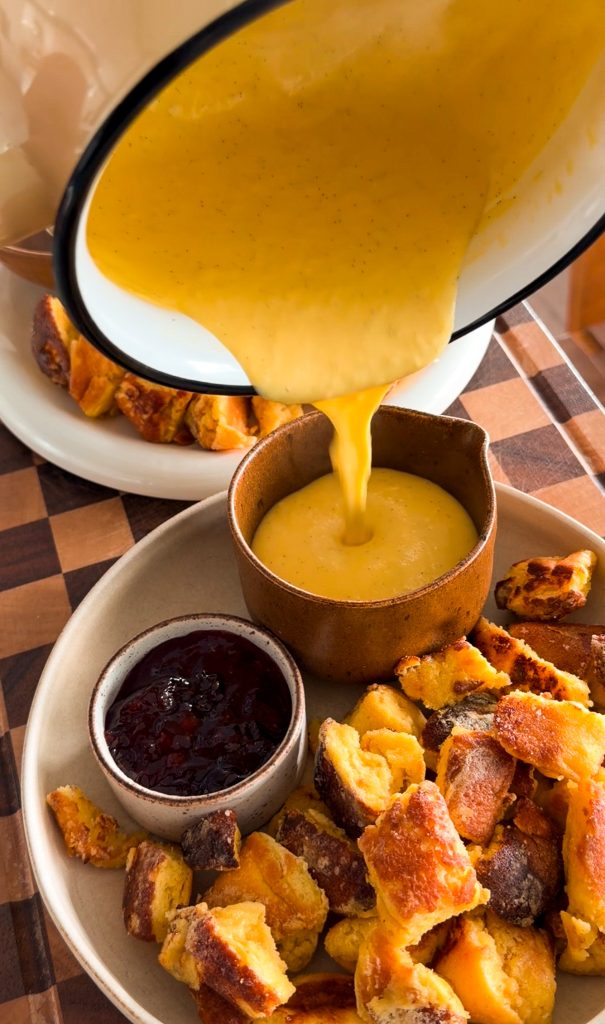
Helpful tip:
If the sauce thickens too much, a small splash of warm milk will loosen it right back up.
Set the sauce aside and keep it warm while you make the pancake, giving it a stir every so often. You can also just make it ahead of time, store it in the fridge, and warm it up before serving.
Making the Batter (This Is Where the Texture Comes From)
This batter starts simply, but the egg whites are what make Kaiserschmarrn special.
- Whisk the egg yolks with some of the sugar until pale and slightly thickened. This helps dissolve the sugar and gives the batter structure.
- Whisk in the milk and vanilla, then add the flour and salt. Mix just until smooth—stop as soon as it comes together.
Now for the egg whites:
- Whip them with the rest of the sugar until stiff, glossy peaks form. They should hold their shape but still look smooth, not dry and clumpy.
To combine everything:
- Fold a small scoop of the egg whites into the batter first to loosen it.
- Then gently fold the batter into the remaining whites, keeping as much air as possible.
The final mixture should feel light and almost fluffy on its own.
Cooking the Kaiserschmarrn (The Fun Part)
Heat a large skillet over medium-low heat and melt butter. Lower heat is key here—this pancake needs time.
- Pour the batter into a large deep pan and gently spread it out.
- Let it cook undisturbed until the bottom is golden and the sides looks mostly set. You can slide a spatula under to see if its nice and golden brown underneath.
Instead of flipping it whole, do this:
- Use a spatula to cut long lines vertically and horizontally, creating rough squares or rectangles.
It will look messy. That’s exactly right.
Tools I like using:
- A metal spatula for cutting clean lines
- A flexible rubber spatula for flipping and scooping without breaking everything apart
Flip sections as needed and let them cook briefly on the other side.
Once cooked through but still soft:
- Tear the pancake into smaller individual pieces
- Push them toward the edges of the pan to create space in the center
Add butter and sugar to that open spot and let the sugar melt into the butter first. Don’t rush it. Once it’s dissolved and bubbling, toss everything together so the pieces get coated and caramelized. This is where those crispy edges really develop.
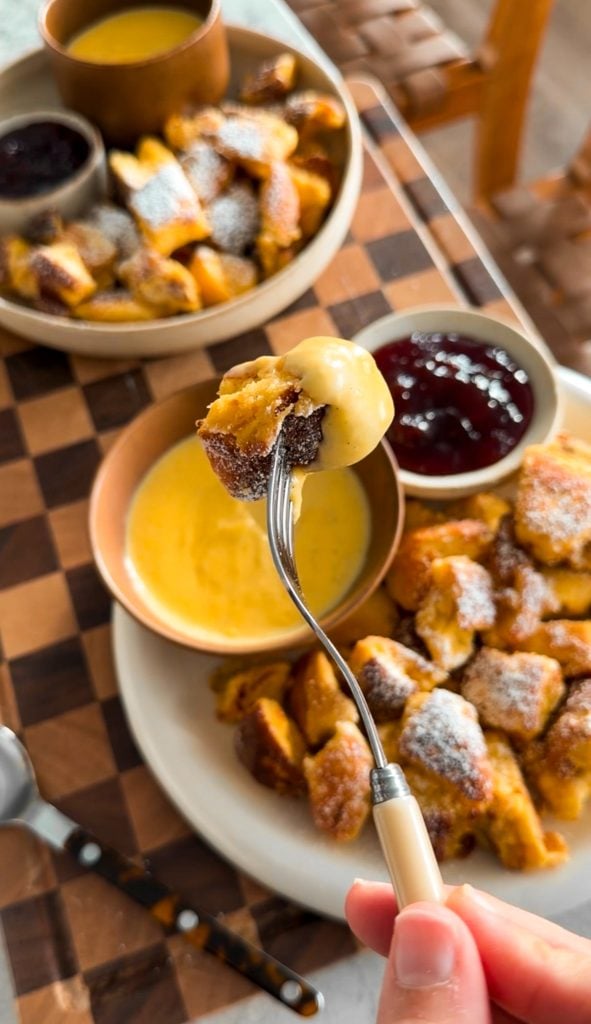
Finish with a generous dusting of powdered sugar and serve immediately with the warm vanilla sauce.
Traditional Notes and Variations
- Traditionally served with plum sauce if you’d like to opt for that instead.
- It’s also traditionally made with raisins. If you’d like to add raisins, do so before cutting and flipping.
- Vanilla sauce is a classic alternative and incredibly popular
- Medium-low heat is essential for fluffy centers and crisp edges
- Works just as well for brunch as it does for dessert
Craving More Sweet Treats? Try These Recipes Out!
- Strawberry Croissants: Flaky puff pastry croissants filled with vanilla custard and fresh strawberries, baked until golden and crisp with a creamy center.
- Sticky Date Cake: A rich, tender date cake that stays incredibly moist and is finished with a warm, glossy toffee sauce poured right over the top.
- French Crepes: Thin, delicate crepes filled with Nutella, strawberries, and cream, cooked until soft and lightly golden.
- Fluffy Beignets: Pillowy-soft beignets with a light, airy interior, fried until golden and generously dusted with powdered sugar.
- Banana Bread Pancakes: Thick, fluffy pancakes that taste just like banana bread, with a soft crumb and plenty of banana flavor in every bite.
If you make this recipe, make sure to leave a comment below and let me know how it turns out — I love hearing from you! And if you snap a photo, don’t forget to tag me over on Instagram or TikTok so I can see your creations too.
You can also find this recipe and so many more on my Pinterest — perfect for saving to your board for later. And if you’re more of a visual learner, check out my YouTube channel, where I walk you through recipes step-by-step just like this one.
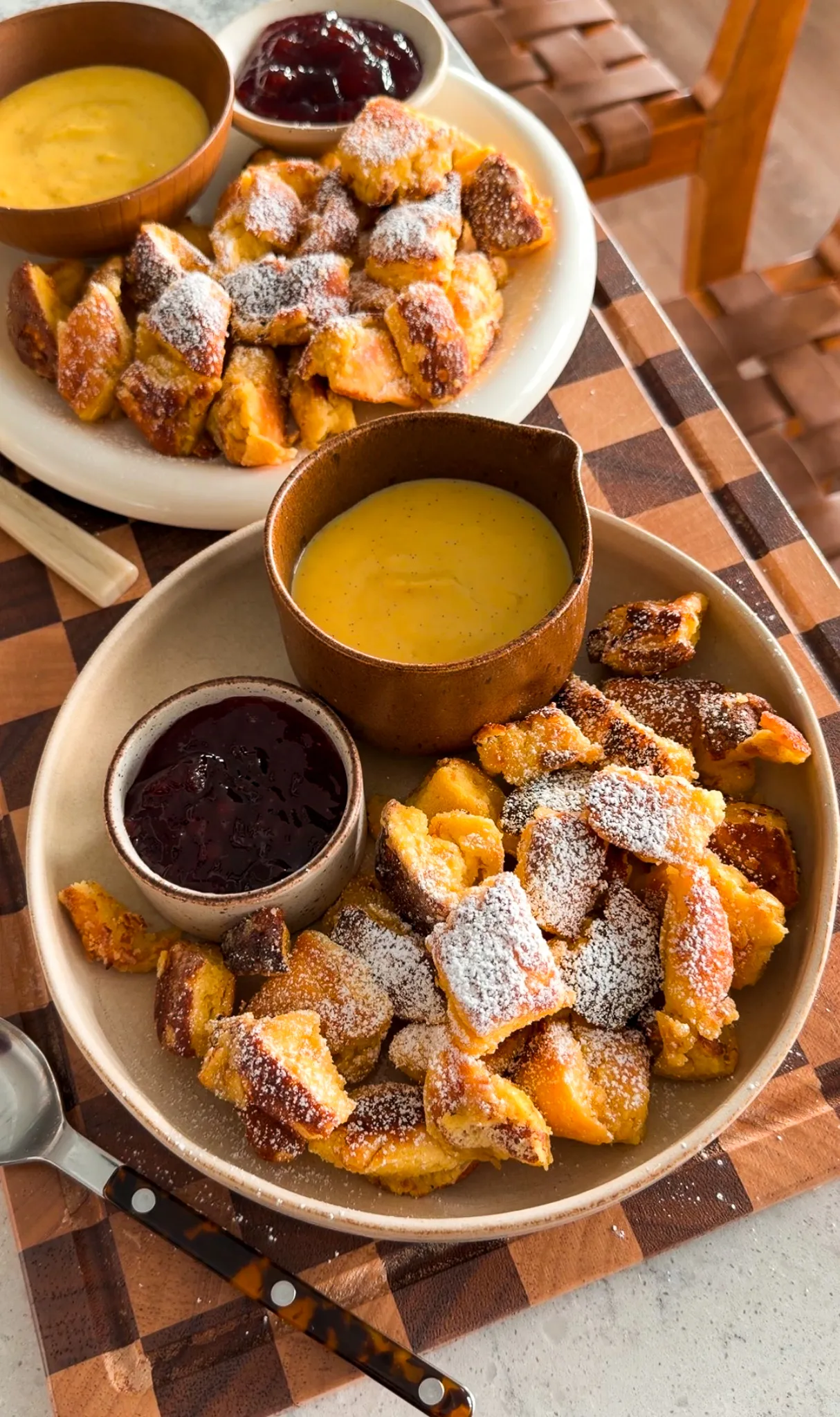
Kaiserschmarrn – Austrian Pancakes
Ingredients
KAISERSCHMARRN BATTER
- 1 1/4 cups all-purpose flour
- 4 tablespoons white sugar, divided
- 1/4 teaspoon salt
- 4 large eggs, separated
- 1 teaspoon vanilla extract
- 1 cup cold milk
FOR COOKING THE PANCAKES
- 3 tablespoons clarified butter/ghee or unsalted butter, divided
- 2 tablespoons white sugar
- Powdered sugar, for topping
VANILLA SAUCE
- 1/2 cup whole milk
- 1/2 cup heavy cream
- 1/2 tablespoon vanilla bean paste
- Pinch of salt
- 1/4 cup white sugar
- 1 teaspoon cornstarch
- 3 egg yolks
Instructions
MAKE THE VANILLA SAUCE
- In a saucepan, combine the milk, cream, and vanilla bean paste. Warm over medium-low heat until steaming and just beginning to simmer, about 3–4 minutes. Do not boil.
- While the milk mixture warms, in a separate bowl whisk together the egg yolks, sugar, cornstarch, and salt until lighter in color and the sugar is fully dissolved, about 1–2 minutes.
- Slowly drizzle the warm milk mixture into the egg yolk mixture while whisking constantly to temper the eggs.
- Pour the mixture back into the saucepan.
- Cook over medium-low heat, stirring constantly, until the sauce thickens enough to coat the back of a spoon, about 3–5 minutes.
- Remove from heat and keep warm, stirring occasionally, while you make the pancakes.
MAKE THE KAISERSCHMARRN
- In a large bowl, whisk the egg yolks with 2 tablespoons of the sugar until pale and slightly thickened, about 1–2 minutes. Whisk in the milk and vanilla extract.
- Add the flour and salt directly into the wet mixture and whisk just until smooth and lump-free.
- In a clean bowl, whip the egg whites using a stand mixer fitted with the whisk attachment or a hand mixer on medium speed until foamy. Increase to medium-high speed, gradually add the remaining 2 tablespoons of sugar, and continue whipping until stiff, glossy peaks form, about 2–3 minutes.
- Fold a small scoop of the whipped egg whites into the batter to loosen it. Pour the batter into the remaining egg whites and gently fold until just combined, keeping the mixture light and airy.
- Heat a large frying pan/skillet over medium-low heat and melt 1 tablespoon of the clarified butter. Pour in the batter and spread gently.
- Let the pancake cook undisturbed for 3–4 minutes, until the bottom is golden and the top is mostly set.
- Using a spatula, cut the pancake by making long cuts vertically and horizontally to form rough squares or rectangles. It will get messy — don’t worry about making it perfect. I like using a metal spatula to cut and a flexible rubber spatula to help flip.
- Flip sections as needed and cook for another 2–3 minutes, until cooked through but still soft.
- Tear the pancake into rustic pieces. Push the pieces outward to create an empty space in the center of the pan.
- Add the remaining butter and sugar to the center. Let the sugar dissolve into the butter for 30–45 seconds, then toss everything together to coat and caramelize the pieces, about 1–2 minutes.
- Remove from heat and dust generously with powdered sugar.
Notes
A: Kaiserschmarrn is often made with raisins sprinkled over the batter in the pan after pouring it in, and traditionally served with plum sauce on the side instead of or alongside vanilla sauce. Q: Can I use unsalted butter instead of clarified butter or ghee?
A: Yes. Unsalted butter works well—just keep the heat on medium-low and add it in stages so it doesn’t brown too quickly. Clarified butter or ghee is traditional because it has a higher smoke point, but regular butter is a great substitute. Q: Why cook the pancake over medium-low heat?
A: Medium-low heat allows the pancake to cook through evenly without burning, keeping the inside soft and fluffy. Q: Can I make the vanilla sauce ahead of time?
A: Yes. The sauce can be made up to a day ahead and gently reheated over low heat, stirring constantly to keep it smooth. Q: How do I know when the sugar is ready to toss with the pancakes?
A: Once the sugar is fully dissolved and lightly bubbling in the butter, it’s ready to coat and caramelize the pancake pieces.
Did You Make This Recipe?
If you make this recipe, leave a comment below and let me know how it turns out. I love hearing from you!


Rate & Review