
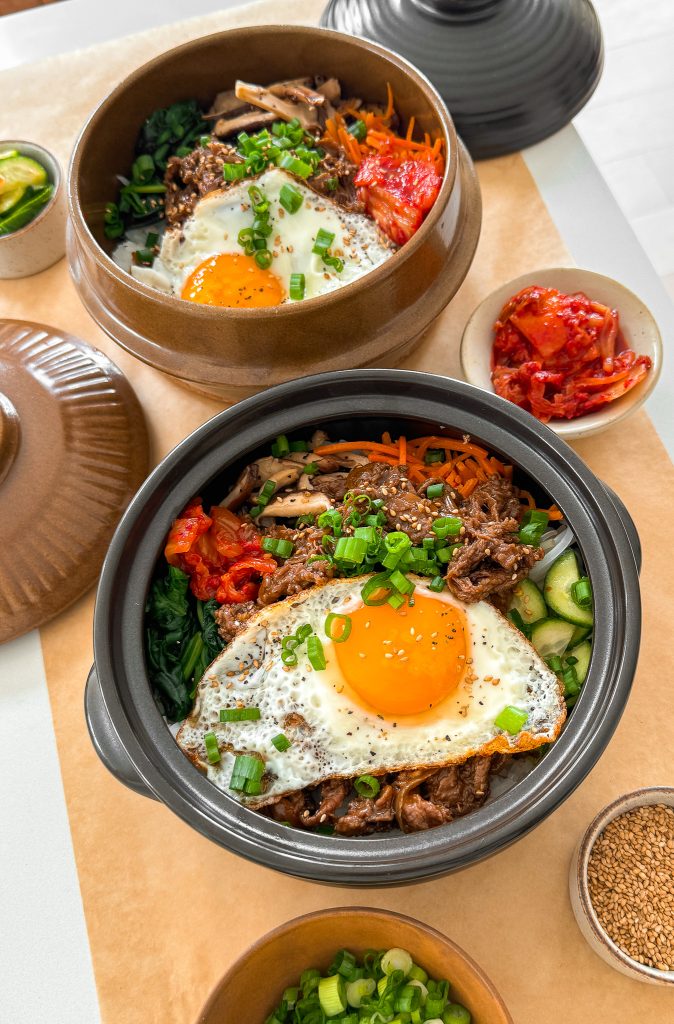
Bibimbap is one of my favorite Korean dishes, combining so many flavors and textures into one delicious bowl. With tender marinated bulgogi, a variety of seasoned vegetables, and a spicy gochujang sauce, each bite is a delightful mix of savory, sweet, and spicy. Topped with a fried egg and served over sizzling jasmine rice, this dish is the definition of COMFORT!

Preparing the Bulgogi
Bulgogi, or marinated beef, is the star of this dish! Start by thinly slicing boneless ribeye steak and marinating it in a mixture of soy sauce, brown sugar, sesame oil, minced garlic, ginger paste, chili powder, red pepper flakes, black pepper, olive oil, and a splash of rice vinegar. Let the beef soak up all these wonderful flavors for at least 30 minutes, but if you have more time, letting it marinate longer will make it even more delicious. This is optional but adds so much flavor – thinly slice yellow onions and add them to the marinade with the beef. Once marinated, cook the beef in a hot skillet over very high heat until it’s fully cooked and caramelized. It cooks very fast since the meat is really thin. The result is tender, flavorful beef that adds a savory depth to your bibimbap.
Some stores sell already prepared thinly shaved ribeye like the kind used to make Philly cheesteaks. You can also find it sometimes at an Asian supermarket like H-Mart. If you are thinly slicing it yourself, popping the steak in the freezer for an hour before will help firm it up a bit to make it easier to cut.
Tips: For the best texture, make sure your steak slices are as thin as possible. Partially freezing the steak before slicing can make this easier. If you don’t want to thinly slice steak yourself, you can buy shaved steak from the store. They sell it at Trader Joe’s and a lot of supermarkets – it’s the same meat used to make Philly Cheesesteaks. You can also find thinly shaved steak at the Korean store H-Mart.
Cooking the Veggies
The variety of vegetables in bibimbap not only adds nutrition but also a beautiful array of colors and textures. The veggies are what make this dish feel like one big warm hug. Now this can get a bit overwhelming because there are so many veggies and each is prepared its own way. So feel free to tweak this part of the process whether it’s using less veggies or switching up which kind you use!
MUSHROOMS: For the mushrooms, sauté chopped shiitake mushrooms in butter with a sprinkle of salt and pepper until they’re tender over medium heat. You can use any kind of mushrooms you love like portobello, white, or even enoki!
CARROTS: For the carrots, julienne them and sauté in a bit of water and sesame oil with a pinch of salt until they soften. I just buy shredded carrots in a bag from the store and use that!
SPINACH: Add the spinach to a pan over low heat, season with salt, and cover until spinach is softened and wilted.
CUCUMBERS: For a tangy crunch, mix diced cucumbers with chili paste, sugar, rice vinegar, hot water, and a pinch of salt, letting it sit for a few minutes to pickle quickly.
BEAN SPROUTS: Finally, blanch the bean sprouts in boiling water and drain them well.
Tips: You can prepare the veggies ahead of time and store them in separate containers in the fridge. This makes assembling the bibimbap much quicker.
Making the Gochujang Sauce
The gochujang sauce is the heart of bibimbap. Combine gochujang paste with sesame oil, low-sodium soy sauce, a touch of white sugar, water, and a dollop of Kewpie mayo. Adjust the ingredients to your taste. You can also opt for mild gochujang or hot gochujang paste. This sauce ties all the ingredients together with its rich, spicy flavor.
Assembling the Bibimbap
Start with a base of cooked jasmine rice in a bowl. Arrange the bulgogi, mushrooms, carrots, spinach, cucumbers, and bean sprouts on top of the rice. Drizzle generously with the gochujang sauce. Top everything with a fried egg and a sprinkle of chopped green onions. Mix everything together before eating to enjoy all the flavors and textures in each bite.
Tips: For an extra special touch, use a hot stone pot (dolsot) to assemble your bibimbap. The pot gives the rice a crispy bottom and keeps everything warm. Just put the hot stone pot in a preheated oven for 30 minutes to get it nice hot. If you have an open flame stove, even better to get the dolsot nice and hot on there. Once hot, coat it in sesame oil and add the rice. Let it sizzle and get nice and crispy before adding all the toppings. See the next section for more details on this!
Traditional Hot Stone Pot Bibimbap
To make bibimbap the traditional way, you’ll need a hot stone pot. Heat the pot on the stove until it’s very hot, then add a bit of sesame oil to the bottom. Quickly add the cooked jasmine rice, pressing it down slightly. Arrange the bulgogi, vegetables, and gochujang sauce on top, just like before. Let the pot sit on the heat until you hear the rice crackling. The result is a bibimbap with a deliciously crispy rice bottom.
Tips: Be careful when handling the hot stone pot; it gets very hot. Use oven mitts to protect your hands.
Variations to Try
Bibimbap is incredibly versatile, and there are many variations you can try. For a vegetarian version, simply skip the bulgogi and add more veggies or some tofu marinated in soy sauce, sesame oil, and garlic. If you prefer chicken, marinate thinly sliced chicken breast or thigh in the same marinade as the bulgogi and cook it until it’s tender and caramelized. You can also experiment with different vegetables, such as bell peppers, zucchini, or kale, to add your personal touch to the dish.
Tips: Use whatever vegetables you have on hand to make your bibimbap unique. The key is to balance the flavors and textures.
Bibimbap is not only a feast for the eyes but also a delight for the palate. With its harmonious blend of flavors and textures, it’s a dish that’s sure to satisfy. Whether you stick to the traditional recipe or try out some variations, making bibimbap at home is a rewarding experience that brings a taste of Korea to your kitchen. Enjoy!
Craving More Rice and Meat? Try These Recipes Out!
- Halal Cart Chicken and Rice Bowls
- Chipotle Shrimp Bowls
- Sweet and Spicy Salmon Bowls
- Chicken Satay Spring Roll Bowls
- Cava Copycat Bowls
If you tried this recipe and loved it, drop by down below and let me know how you liked it with a rating and comment! Feel free to also leave a question there about this recipe and I’ll get right back to it.
To see more recipes and behind the scenes, follow along on Instagram and Youtube! I’m also now on Pinterest pinning away so stop by and see what’s up.

Bibimbap
Ingredients
BULGOGI
- 1 pound ribeye or sirloin steak, thinly sliced
- 1/2 yellow onion, thinly sliced
- 4 tablespoons low-sodium soy sauce
- 2 tablespoons brown sugar
- 1 1/2 tablespoon sesame oil
- 1 tablespoon minced garlic
- 1/2 tablespoon ginger paste
- 2 teaspoons chili powder
- 1/2 to 1 teaspoon red pepper flakes
- 1/2 teaspoon black pepper
- 1 tablespoon olive oil
- 1 tablespoon rice vinegar
VEGGIES
- 1 cup shitake mushrooms, chopped
- 1 tablespoon unsalted butter
- salt, to taste
- black pepper, to taste
- 1 cup carrots
- 1 tablespoon water
- 1 teaspoon sesame oil
- salt, to taste
- 3 cups spinach
- salt, to taste
- 2 small cucumbers, diced
- 1 tablespoon chili paste
- 1/2 tablespoon sugar
- 1/4 cup rice vinegar
- 1/2 cup hot water
- salt, to taste
- 1 cup bean sprouts
- boiling water
GOCHUJANG SAUCE
- 1/2 cup gochujang paste, mild or hot
- 1 tablespoon low-sodium soy sauce
- 1/2 tablespoon sesame oil
- 1 1/2 to 2 tablespoons white sugar
- 1/4 cup water
- 1/4 cup kewpie mayo
- 2 tablespoons rice vinegar
OTHER
- cooked jasmine rice
- green onions, chopped
- fried egg
Instructions
Prepare the Bulgogi:
- In a bowl, mix soy sauce, brown sugar, sesame oil, garlic, ginger paste, chili powder, red pepper flakes, black pepper, olive oil, and rice vinegar.
- Add thinly sliced steak and onions to the marinade, mix well, and let it marinate for at least 30 minutes.
- Cook the marinated beef in a hot skillet until fully cooked and caramelized.
Cook the Veggies:
- Mushrooms: Sauté shiitake mushrooms in butter with salt and pepper until tender over medium heat.
- Carrots: Sauté carrots in a bit of water and sesame oil with a pinch of salt until soft.
- Spinach: Add a drizzle of oil to a pan and add the spinach in with a sprinkle of salt. Cover for 2 to 3 minutes until softened.
- Cucumbers: Mix diced cucumbers with chili paste, sugar, rice vinegar, hot water, and a pinch of salt. Let it sit for a few minutes to quickly pickle.
- Bean Sprouts: Blanch bean sprouts in boiling water for 10 minutes, then drain.
Make the Gochujang Sauce:
- Combine gochujang paste, sesame oil, white sugar, water, and a dollop of Kewpie mayo. Adjust the ingredients to taste.
- Mix together well until creamy and set aside.
Assemble the Bibimbap:
- In a bowl, place a serving of cooked jasmine rice.
- Arrange bulgogi, mushrooms, carrots, spinach, cucumbers, and bean sprouts on top of the rice.
- Drizzle with gochujang sauce.
- Top with a fried egg and chopped green onions.
- Mix everything together before eating and enjoy!
Did You Make This Recipe?
If you make this recipe, leave a comment below and let me know how it turns out. I love hearing from you!


Rate & Review